How automation transforms modern warehousing
Explore how automation, robotics, and intelligent material flow systems are transforming modern warehousing — increasing speed, accuracy, and long-term scalability.
Transforming modern warehousing for speed, accuracy, and scale
Warehousing is no longer just about storage — it has become a dynamic, technology-driven operation at the core of modern supply chains. As global commerce accelerates and customer expectations continue to rise, warehouses must operate faster, more accurately, and with greater flexibility than ever before. Automation is no longer a future concept. It is actively reshaping how warehouses function, how goods move, and how businesses scale. From conveyor systems and robotics to data-driven management platforms, modern warehousing is undergoing a fundamental transformation.
The pressure driving change
Today’s warehouses face mounting operational demands. E-commerce growth, shorter delivery windows, higher SKU counts, and labor shortages are placing intense pressure on traditional workflows. Manual material handling systems often struggle to keep up with fluctuating order volumes. Human-dependent processes can introduce variability, errors, and inefficiencies — especially during peak demand periods. As fulfillment expectations shift toward same-day and next-day delivery, warehouses must transition from reactive operations to highly coordinated, automated ecosystems.Automation has become the strategic response to these challenges.
Intelligent material flow systems
One of the most visible changes in modern warehousing is the shift toward automated material flow. Conveyor systems now form the backbone of many high-performance facilities. Instead of relying on manual pallet or carton transport, goods move seamlessly between receiving, storage, picking, packing, and dispatch zones. Intelligent routing systems balance loads across the network, reducing congestion and optimizing throughput. Automated sorting technologies further enhance efficiency by quickly directing products to the correct outbound channel. These systems reduce errors while increasing processing speed — particularly in high-volume environments. By minimizing manual handling, warehouses achieve greater consistency.
Robotics and autonomous mobility
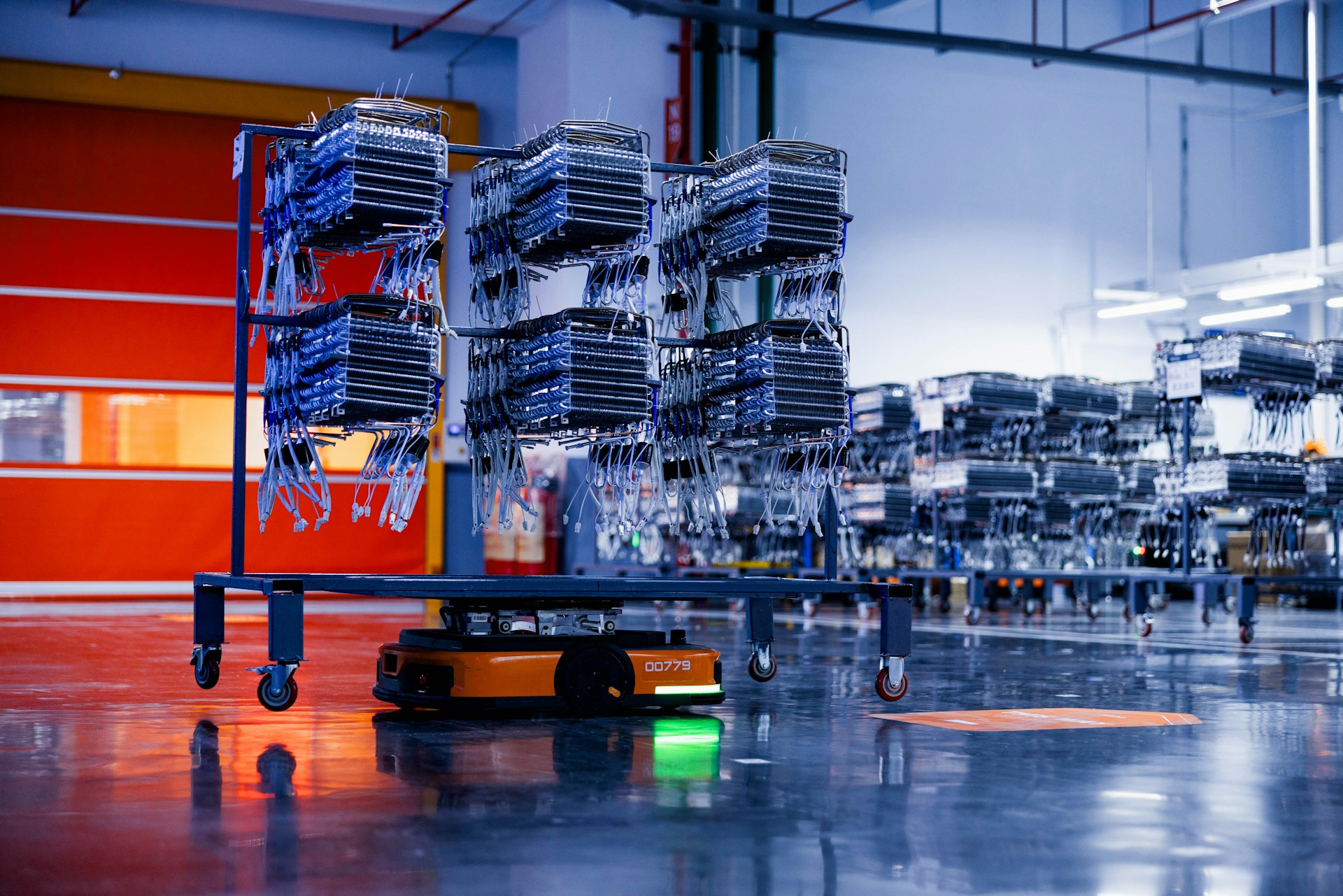
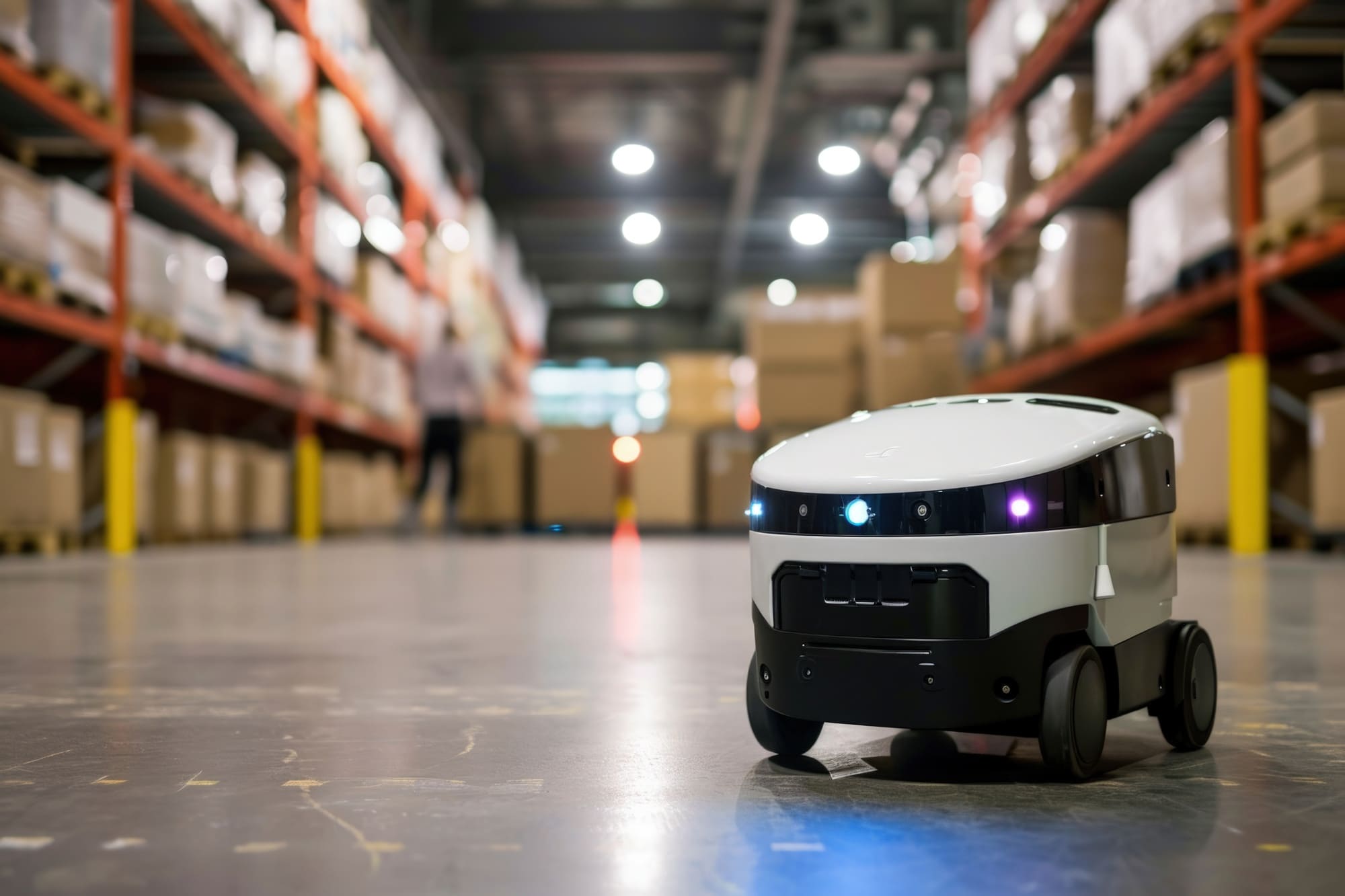
Robotics have introduced a new level of flexibility into warehouse operations. Autonomous Mobile Robots (AMRs) and robotic picking systems can dynamically adjust to shifting workloads and order priorities.
Unlike fixed automation, mobile robotics offer scalable deployment. Additional units can be introduced during peak periods and redeployed as demand shifts. This adaptability allows facilities to respond quickly to seasonal surges without extensive infrastructure modifications.
Robotics also reduce repetitive strain on workers, improving safety and allowing human operators to focus on higher-value tasks such as supervision, quality control, and system optimization.
Automation enhances human capability rather than replacing it.
Data as the operational engine
Modern warehouse automation is powered by data. Warehouse Management Systems (WMS) integrate with conveyor networks, robotic fleets, and scanning systems to provide real-time visibility into operations.
Through data analysis, facilities can monitor:
Order flow patterns
Equipment utilization rates
Bottleneck formation
Inventory movement trends
Picking accuracy metrics
This visibility enables continuous improvement. Managers can adjust routing logic, rebalance workloads, and forecast demand with greater precision.
Warehouses are evolving into intelligent systems where decisions are driven by measurable performance insights rather than guesswork.
Designing for scalability
One of automation’s most important contributions is scalability. Growth no longer requires complete facility redesign. Modular conveyor systems, automation-ready storage infrastructure, and expandable robotic fleets allow warehouses to grow incrementally. New zones, additional sorting lines, or increased picking capacity can be integrated without disrupting existing operations.
Scalability protects long-term investment. It ensures that infrastructure evolves alongside business growth instead of limiting it. In rapidly expanding industries, this flexibility is critical.
Safety, efficiency, and sustainability
Automation improves not only speed but also operational stability. Reduced manual transport lowers accident risk and creates more structured, predictable workflows.
Energy-efficient motors, optimized routing algorithms, and reduced idle time contribute to sustainability goals. Automated systems can often process more volume within the same footprint, reducing the need for facility expansion. By combining safety improvements with energy efficiency, automation supports both operational and environmental performance objectives.
The competitive advantage of automation
Warehouses that embrace automation gain measurable advantages:
Faster order processing
Higher throughput capacity
Improved inventory accuracy
Reduced labor dependency
Lower long-term operating costs
Greater adaptability to market fluctuations
In competitive supply chains, speed and precision directly influence customer satisfaction and brand loyalty.
Automation transforms warehousing from a cost center into a strategic asset.
Conclusion
Automation is not simply enhancing modern warehousing — it is redefining it. Intelligent material flow systems, robotics, data integration, and scalable infrastructure are shaping a new generation of facilities designed for continuous performance. As commerce continues to accelerate, warehouses that invest in automation will be positioned to meet demand with speed, accuracy, and resilience. The future of warehousing belongs to operations that move smarter, scale faster, and adapt continuously.
Transforming modern warehousing for speed, accuracy, and scale
Warehousing is no longer just about storage — it has become a dynamic, technology-driven operation at the core of modern supply chains. As global commerce accelerates and customer expectations continue to rise, warehouses must operate faster, more accurately, and with greater flexibility than ever before. Automation is no longer a future concept. It is actively reshaping how warehouses function, how goods move, and how businesses scale. From conveyor systems and robotics to data-driven management platforms, modern warehousing is undergoing a fundamental transformation.
The pressure driving change
Today’s warehouses face mounting operational demands. E-commerce growth, shorter delivery windows, higher SKU counts, and labor shortages are placing intense pressure on traditional workflows. Manual material handling systems often struggle to keep up with fluctuating order volumes. Human-dependent processes can introduce variability, errors, and inefficiencies — especially during peak demand periods. As fulfillment expectations shift toward same-day and next-day delivery, warehouses must transition from reactive operations to highly coordinated, automated ecosystems.Automation has become the strategic response to these challenges.
Intelligent material flow systems
One of the most visible changes in modern warehousing is the shift toward automated material flow. Conveyor systems now form the backbone of many high-performance facilities. Instead of relying on manual pallet or carton transport, goods move seamlessly between receiving, storage, picking, packing, and dispatch zones. Intelligent routing systems balance loads across the network, reducing congestion and optimizing throughput. Automated sorting technologies further enhance efficiency by quickly directing products to the correct outbound channel. These systems reduce errors while increasing processing speed — particularly in high-volume environments. By minimizing manual handling, warehouses achieve greater consistency.
Robotics and autonomous mobility
Robotics have introduced a new level of flexibility into warehouse operations. Autonomous Mobile Robots (AMRs) and robotic picking systems can dynamically adjust to shifting workloads and order priorities.
Unlike fixed automation, mobile robotics offer scalable deployment. Additional units can be introduced during peak periods and redeployed as demand shifts. This adaptability allows facilities to respond quickly to seasonal surges without extensive infrastructure modifications.
Robotics also reduce repetitive strain on workers, improving safety and allowing human operators to focus on higher-value tasks such as supervision, quality control, and system optimization.
Automation enhances human capability rather than replacing it.
Data as the operational engine
Modern warehouse automation is powered by data. Warehouse Management Systems (WMS) integrate with conveyor networks, robotic fleets, and scanning systems to provide real-time visibility into operations.
Through data analysis, facilities can monitor:
Order flow patterns
Equipment utilization rates
Bottleneck formation
Inventory movement trends
Picking accuracy metrics
This visibility enables continuous improvement. Managers can adjust routing logic, rebalance workloads, and forecast demand with greater precision.
Warehouses are evolving into intelligent systems where decisions are driven by measurable performance insights rather than guesswork.
Designing for scalability
One of automation’s most important contributions is scalability. Growth no longer requires complete facility redesign. Modular conveyor systems, automation-ready storage infrastructure, and expandable robotic fleets allow warehouses to grow incrementally. New zones, additional sorting lines, or increased picking capacity can be integrated without disrupting existing operations.
Scalability protects long-term investment. It ensures that infrastructure evolves alongside business growth instead of limiting it. In rapidly expanding industries, this flexibility is critical.
Safety, efficiency, and sustainability
Automation improves not only speed but also operational stability. Reduced manual transport lowers accident risk and creates more structured, predictable workflows.
Energy-efficient motors, optimized routing algorithms, and reduced idle time contribute to sustainability goals. Automated systems can often process more volume within the same footprint, reducing the need for facility expansion. By combining safety improvements with energy efficiency, automation supports both operational and environmental performance objectives.
The competitive advantage of automation
Warehouses that embrace automation gain measurable advantages:
Faster order processing
Higher throughput capacity
Improved inventory accuracy
Reduced labor dependency
Lower long-term operating costs
Greater adaptability to market fluctuations
In competitive supply chains, speed and precision directly influence customer satisfaction and brand loyalty.
Automation transforms warehousing from a cost center into a strategic asset.
Conclusion
Automation is not simply enhancing modern warehousing — it is redefining it. Intelligent material flow systems, robotics, data integration, and scalable infrastructure are shaping a new generation of facilities designed for continuous performance. As commerce continues to accelerate, warehouses that invest in automation will be positioned to meet demand with speed, accuracy, and resilience. The future of warehousing belongs to operations that move smarter, scale faster, and adapt continuously.